“Diabetes is relatively easy to reproduce in rodents. Progressive diabetic kidney disease is not.“
Many established models successfully reproduce hyperglycemia, obesity or insulin resistance. However, generating the renal phenotype that ultimately matters for drug development (persistent albuminuria, glomerular injury, fibrosis and progressive functional impairment) remains much more challenging.
This is one of the major limitations of preclinical diabetic kidney disease (DKD) research. No single rodent model reproduces all the metabolic, functional and histopathological features of human DKD, and model selection therefore needs to be driven by the therapeutic question rather than by diabetes alone [1,2].
At NEPHRIX Biosolutions, this principle guides both model selection and model development:
“A good diabetes model is not necessarily a good diabetic kidney disease model.“
Sometimes a conventional diabetic model is sufficient. In other situations, an additional renal or haemodynamic stressor is needed to reveal the disease component that the candidate is designed to treat. Two models from our current DKD platform illustrate this strategy particularly well.
When STZ alone is not enough: adding renal stress to amplify kidney disease
Streptozotocin (STZ) is widely used to induce persistent hyperglycemia in rodents. Multiple low-dose regimens offer a flexible way to establish an insulin-deficient diabetic environment in mice.
However, renal disease severity after STZ induction is highly dependent on strain, protocol and study duration. In C57BL/6 mice in particular, STZ alone can produce a relatively modest renal phenotype, which may be insufficient when the objective is to assess a compound targeting progressive kidney injury or fibrosis [3].
One strategy is to combine diabetes with a reduction in nephron mass.
After unilateral nephrectomy, the remaining kidney undergoes adaptive hyperfiltration and increased haemodynamic workload. When this additional stress is combined with sustained hyperglycemia, the renal phenotype can be substantially enhanced.
Uil and colleagues directly compared STZ alone with STZ plus unilateral nephrectomy in C57BL/6J mice. The combined model developed albuminuria, glomerular basement membrane thickening, mesangial expansion, glomerular hypertrophy, early glomerulosclerosis, tubular injury, profibrotic changes and tubulointerstitial fibrosis, while many of these features were milder or absent with STZ alone [3].
This observation is consistent with a broader principle emerging from DKD model development: introducing an additional renal injury or pathological driver can help overcome the relatively mild renal phenotype observed in many conventional diabetic models [2,4].
Our STZ + Ux model
At NEPHRIX Biosolutions, we have implemented a multiple-dose STZ + uninephrectomy model in which the additional renal stress produces two particularly useful features for efficacy studies:
robust albuminuria and a marked amplification of renal fibrosis.
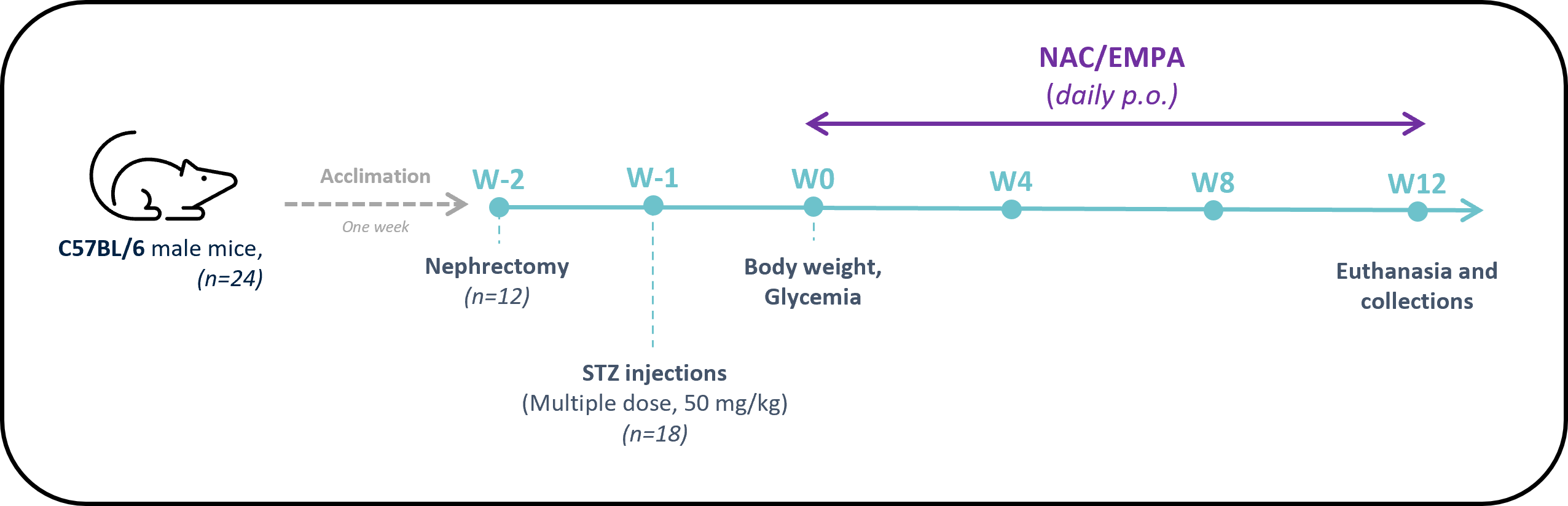
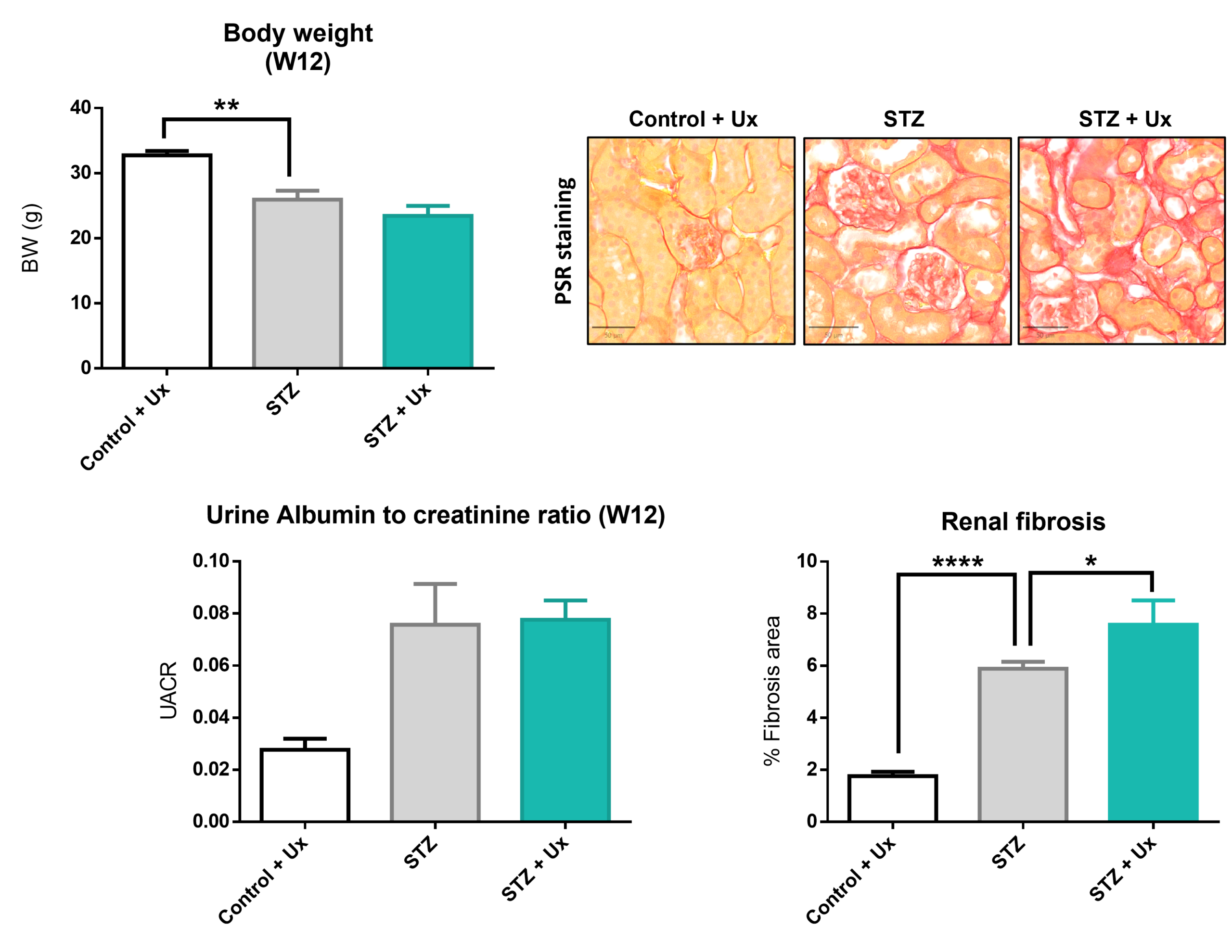
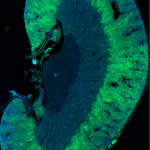
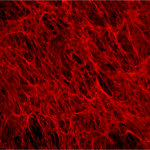
Adding uninephrectomy to multiple-dose STZ strengthens the renal phenotype, with a pronounced fibrotic response.
This distinction matters for compound development. If the therapeutic hypothesis is primarily antifibrotic, a model with severe hyperglycemia but limited extracellular matrix accumulation may provide little opportunity to demonstrate efficacy. In that context, increasing renal stress can create a more appropriate therapeutic window.
The goal is therefore not simply to generate a “more severe” model. It is to generate the renal phenotype required to test the mechanism of action.
Moving closer to progressive human DKD requires multiple disease drivers
STZ + Ux provides a useful model when albuminuria and fibrosis are central endpoints.
But progressive type 2 DKD in humans usually develops within a considerably more complex environment.
Metabolic dysfunction interacts with haemodynamic abnormalities, hypertension, altered glomerular pressure, inflammation and progressive structural remodeling. Reviews of experimental DKD models consistently highlight the difficulty of reproducing this multidimensional disease using a single diabetic trigger [1,5].
For this reason, an advanced model may require several complementary disease drivers.
At NEPHRIX Biosolutions, our most advanced DKD model combines:
db/db + uninephrectomy + Renin-AAV
Each component contributes a different part of the pathological environment.
- The db/db background provides obesity, insulin resistance and sustained type 2 diabetes.
- Uninephrectomy reduces nephron reserve and increases the functional workload placed on the remaining kidney.
- Renin-AAV introduces renin-driven hypertension and additional haemodynamic stress.
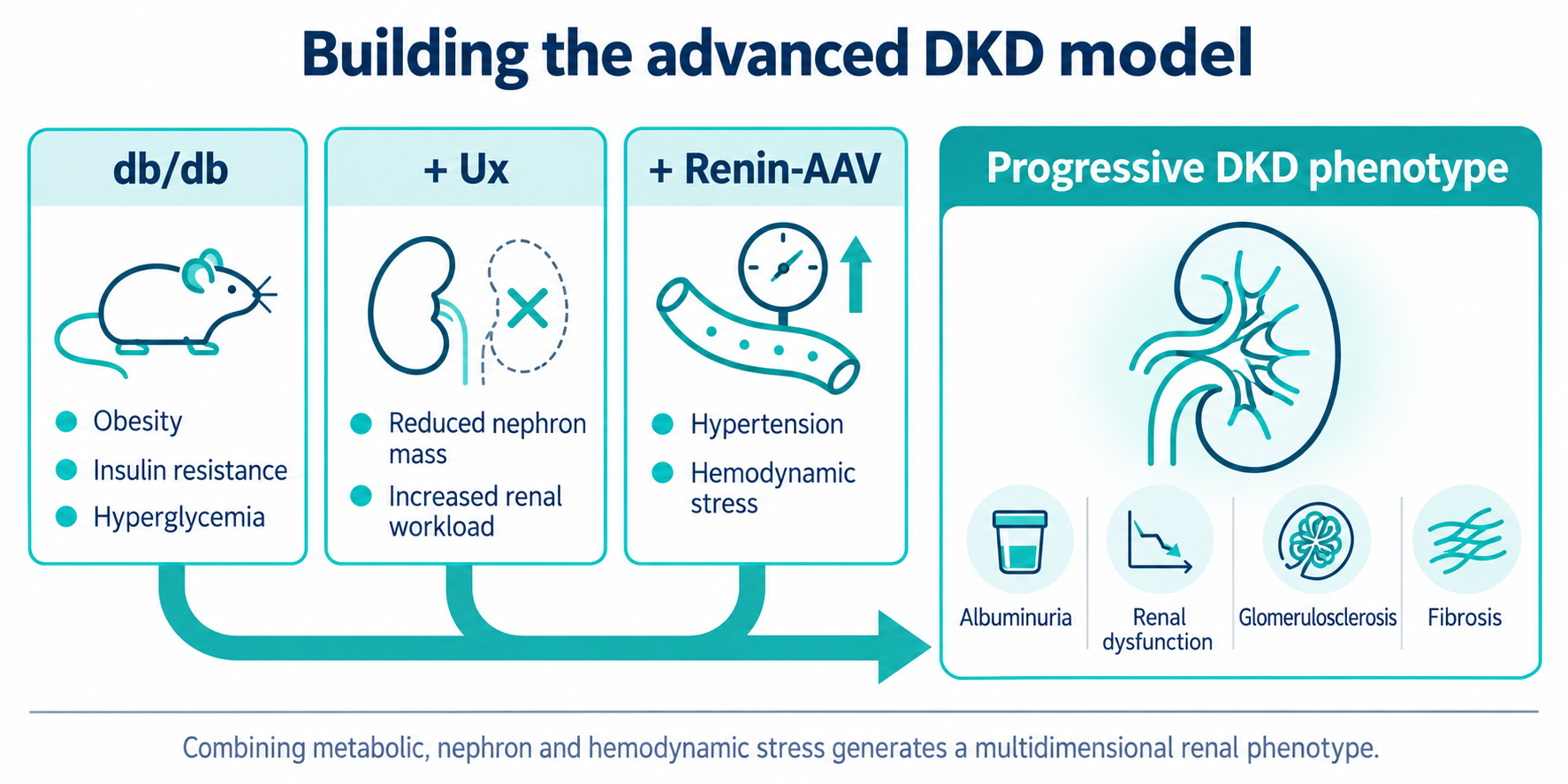
The objective is not merely to increase blood glucose or albuminuria. It is to reproduce several interacting features involved in progressive diabetic kidney disease.
An advanced multihit model with translational features
This approach has been characterized independently in the literature. Østergaard and colleagues studied uninephrectomized db/db mice receiving AAV-mediated renin overexpression and reported severe albuminuria, glomerular hypertrophy and advanced glomerulosclerosis [6]. Importantly, the model was pharmacologically responsive: lisinopril improved albuminuria, glomerulosclerosis, tubulointerstitial injury and inflammation, providing proof of concept for its use in preclinical efficacy studies [6].
The importance of adding renin–angiotensin system activation to diabetes is also supported by other models. For example, diabetic mice with increased renin expression have been shown to develop hypertension, albuminuria, reduced glomerular filtration, glomerulosclerosis and substantial interstitial fibrosis; features that are difficult to obtain simultaneously in many conventional diabetic mouse models [7].
Together, these studies support the concept that combining metabolic and haemodynamic stressors can produce a renal phenotype that captures more features of advanced DKD than diabetes alone.
Progressive DKD phenotype
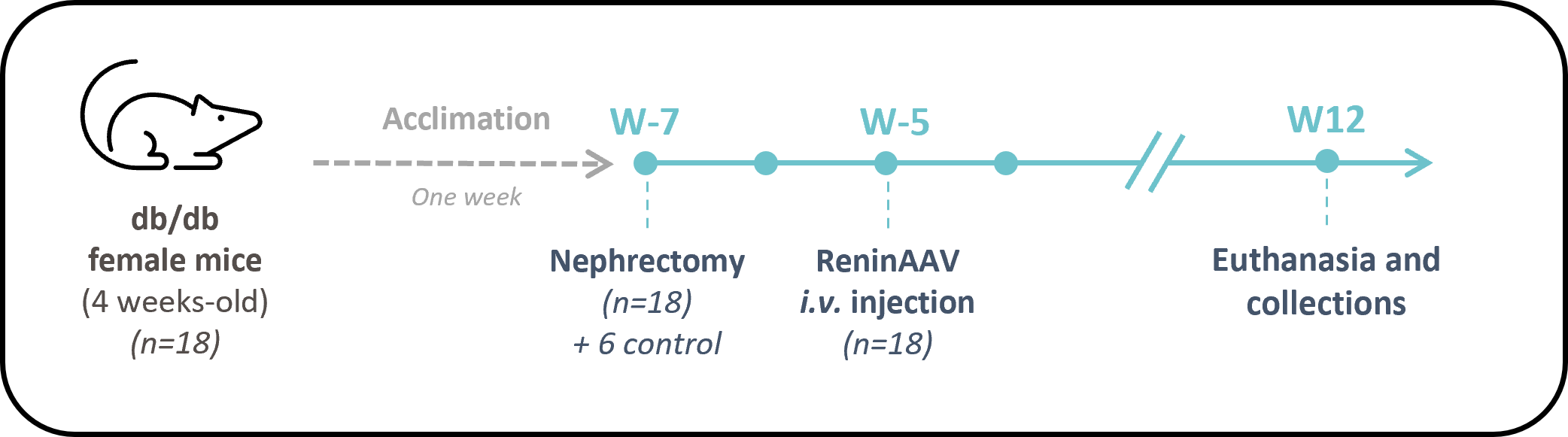
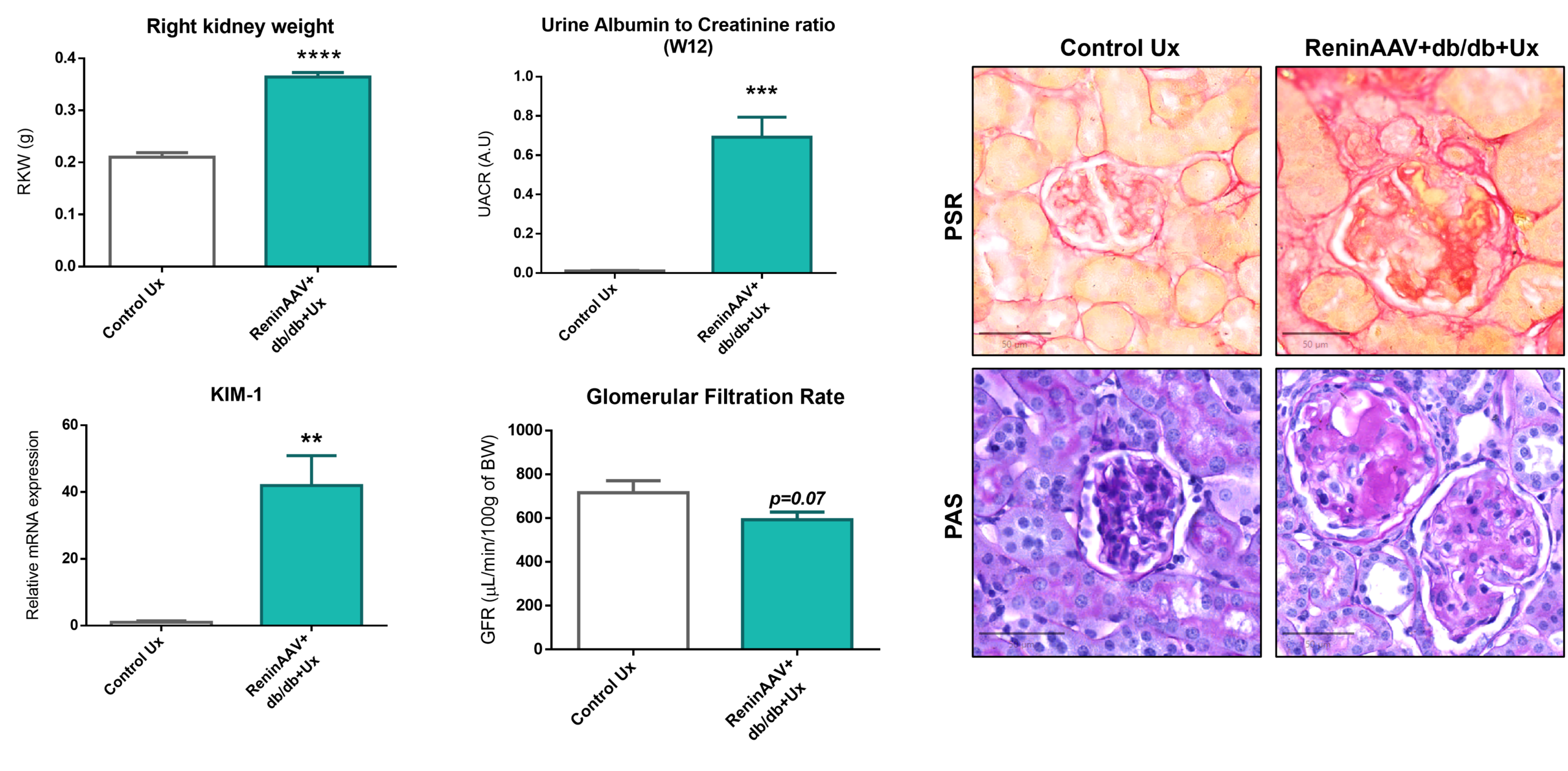
Combining metabolic, nephron and haemodynamic stress produces a multidimensional renal phenotype rather than relying on hyperglycemia as a surrogate for kidney disease.
More complexity is not always better
An advanced multihit model is not automatically the best choice for every therapeutic program.
- For early proof-of-mechanism, a simpler model may provide cleaner and more interpretable biology.
- For an antifibrotic compound, our multiple-dose STZ + Ux model may provide a highly useful combination of albuminuria and strong renal fibrosis.
- For a candidate intended for progressive type 2 DKD, especially when haemodynamic, functional and structural endpoints are important, the db/db + Ux + Renin-AAV model provides a more stringent efficacy setting.
This is where model expertise becomes critical. The question should not be:
“What is the most severe model available?”
It should be:
“Which components of DKD need to be present to test this therapeutic hypothesis?”
Conclusion
No single animal model reproduces the full complexity of human diabetic kidney disease.
The most useful strategy is therefore not necessarily to select the most complex model, but to introduce the pathological drivers required for the development question.
At NEPHRIX Biosolutions, we use this approach to move from established diabetic models toward more advanced systems in which renal and haemodynamic stressors strengthen specific disease features.
The goal is not to make the model more complicated. It is to make the study more informative.
Developing a therapeutic candidate for diabetic kidney disease? Our scientific team can help define the disease model, treatment window and endpoint strategy best aligned with its mechanism of action.
References
1. Sembach FE, Østergaard MV, Vrang N, Feldt-Rasmussen B, Fosgerau K, Jelsing J, Fink LN. Rodent models of diabetic kidney disease: human translatability and preclinical validity. Drug Discovery Today. 2021;26(1):200–217. doi:10.1016/j.drudis.2020.05.004.
2. Luo W, Tang S, Xiao X, Luo S, Yang Z, Huang W, Tang S. Translation Animal Models of Diabetic Kidney Disease: Biochemical and Histological Phenotypes, Advantages and Limitations. Diabetes, Metabolic Syndrome and Obesity. 2023;16:1297–1321. doi:10.2147/DMSO.S408170.
3. Uil M, Scantlebery AML, Butter LM, Larsen PWB, de Boer OJ, Leemans JC, Florquin S, Roelofs JJTH. Combining streptozotocin and unilateral nephrectomy is an effective method for inducing experimental diabetic nephropathy in the ‘resistant’ C57Bl/6J mouse strain. Scientific Reports. 2018;8:5542. doi:10.1038/s41598-018-23839-9.
4. Li F, Ma Z, Cai Y, Zhou J, Liu R. Optimizing diabetic kidney disease animal models: Insights from a meta-analytic approach. Animal Models and Experimental Medicine. 2023;6(5):433–451. doi:10.1002/ame2.12350.
5. Zeng M, Gong Q, Shen H, Chen L, Zhang W. Animal models for diabetic kidney disease: perspectives and prospects. Frontiers in Veterinary Science. 2026;13:1805014. doi:10.3389/fvets.2026.1805014.
6. Østergaard MV, Secher T, Christensen M, et al. Therapeutic effects of lisinopril and empagliflozin in a mouse model of hypertension-accelerated diabetic kidney disease. American Journal of Physiology-Renal Physiology. 2021;321(2):F149–F161. doi:10.1152/ajprenal.00154.2021.
7. He X, Zhang T, Tolosa M, Goru SK, Chen X, Misra PS, Robinson LA, Yuen DA. A new, easily generated mouse model of diabetic kidney fibrosis. Scientific Reports. 2019;9:12549. doi:10.1038/s41598-019-49012-4.