
NEPHRIX Biosolutions, the nephrology preclinical CRO that de-risks clinical studies


10% of the population
is affected by CKD (Chronic Kidney Disease), which is a leading cause of mortality and morbidity around the world. Patients with renal diseases often face delayed diagnosis and a scarcity of medications addressing the underlying causes of the condition, with current treatments primarily addressing symptoms alone. Despite substantial investments and efforts in developing new therapies, pharmaceutical companies encounter a significant rate of failures in clinical trials, largely attributed to ineffective preclinical evaluations.
To address this gap, NEPHRIX Biosolutions offers preclinical CRO services dedicated to renal disease research, combining physiologically relevant in vitro assays with in vivo kidney models to help drug developers make better decisions, earlier.

Kidney models and assays mapped to the disease course

NEPHRIX Biosolutions combines disease-relevant in vitro systems with in vivo models tuned to Chronic Kidney Disease (CKD), Acute Kidney Injury (AKI) & Diabetic Kidney Disease (DKD) preclinical research.

Fibrosis assay readouts
DuoXProx
 
Our proprietary co-culture system, applied across models to keep readouts - KIM-1, NGAL, GFR and beyond - comparable from one disease stage to the next.
Read more

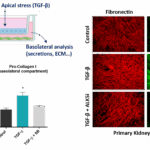
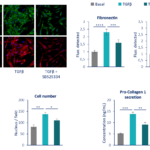
Fibrosis assay


In vitro assays using human primary fibroblasts from different origins (renal, lung, cardiac or skin).
Read more

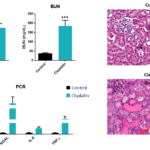
Cisplatin Model


Chemically induced AKI model used to evaluate nephrotoxic potential and protective compounds against tubular injury.
Read more

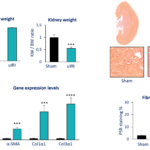
UUO Model study design
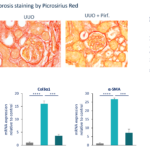
UUO Model
 
Unilateral ureteral obstruction, the fastest model for renal fibrosis progression, used to assess anti-fibrotic candidates on a predictable, accelerated timeline.
 

Read more

IRI Model
 
Surgically induced AKI model reproducing the ischemic insult and reperfusion phase seen in clinical acute kidney injury.
 

Read more

Frequently Asked Questions – Nephrology preclinical CRO

A nephrology preclinical CRO designs and runs the animal and cell-based studies that test whether a new kidney disease therapy is safe and effective before it reaches human trials. Unlike general-purpose CROs that adapt protocols built for other organs, a nephrology-focused CRO builds every study around kidney-specific biology; from disease models that replicate how nephrons actually fail (fibrosis, glomerular injury, tubular damage) to the biomarkers and endpoints regulators and pharma teams expect to see in renal drug development.

At NEPHRIX Biosolutions, this includes in vivo and in vitro model selection, study design, histopathology, and data interpretation with direct access to the scientists running the work, not a layered account-management structure.

Many preclinical CROs offer a kidney model somewhere in their catalog, usually alongside obesity, diabetes, or cardiovascular programs. NEPHRIX Biosolutions was built around a single focus: the kidney, and nothing else. That focus means every model, every readout, and every study design decision is made by a team whose full attention is on renal biology. It’s not adapted from a broader metabolic or fibrotic platform where the kidney is one endpoint among several.

Rather than offering one model for every question, NEPHRIX Biosolutions covers the full mechanistic range a renal program actually needs: UUO for fast antifibrotic screening, IRI and cisplatin-induced AKI for nephrotoxicity and the AKI-to-CKD transition, STZ for diabetic kidney disease, adenine diet for systemic CKD with functional decline, and IgA nephropathy for immune-driven glomerular disease. These in vivo models are backed by in vitro systems including our proprietary DuoXProx™ co-culture platform. The right model depends on your compound’s mechanism, and we help you choose it, not just run it.

Most antifibrotic candidates that fail in the clinic looked promising in preclinical data. The gap is rarely the biology,  it’s a model that never matched the disease, a study window too short to catch real remodeling, or endpoints that don’t line up with what a trial will measure. We design around that gap from day one: choosing induction methods and readouts (GFR, KIM-1, NGAL, and beyond) that mirror clinical reality, so a signal seen at month 3 has a real chance of holding up in Phase 1.

Yes and more importantly, we can follow a compound across the transition between them. Kidney disease rarely stays in one box: an acute injury from ischemia or a nephrotoxic insult often becomes the starting point for chronic decline. Our model portfolio spans that full continuum, from IRI and cisplatin-induced AKI through UUO, adenine diet, STZ and IgA nephropathy, so a program doesn’t have to switch CROs when the disease stage does.

Our mission is to bring our technical and scientifiic expertise for the success of your project

X

    For further information, contact us

    * : mandatory field