ReninAAV UNx db/db mouse model of DKD
A mouse model of hypertension-accelerated diabetic kidney disease
Evaluate your therapeutic candidates in an advanced mouse model of Diabetic Kidney Disease (DKD) combining three major drivers of renal injury:
- Type 2 diabetes,
- Reduced renal mass
- Hypertension.
The ReninAAV UNx db/db model combines genetically induced diabetes and obesity in db/db mice with unilateral nephrectomy (UNx) and adeno-associated virus (AAV)-mediated renin overexpression.
This combination accelerates kidney disease progression and reproduces important pathological features of advanced human DKD, including progressive albuminuria, severe glomerulosclerosis, tubular injury, inflammation, and fibrotic remodeling.
Why Choose Our ReninAAV UNx db/db Model?
- Advanced diabetic kidney disease phenotype: The combination of diabetes, hypertension, and reduced nephron mass enhances renal injury beyond that typically observed in conventional db/db mice.
- Clinically relevant renal endpoints: Progressive albuminuria, glomerulosclerosis, and tubular injury provide complementary measures of kidney disease progression.
- Comprehensive renal assessment: Integration of urinary and plasma biomarkers, quantitative histopathology, and molecular analyses supports multiparametric evaluation of therapeutic efficacy.
Download the poster of our ReninAAV UNx db/db model
Discuss your project with our experts!
Study Design & Protocol

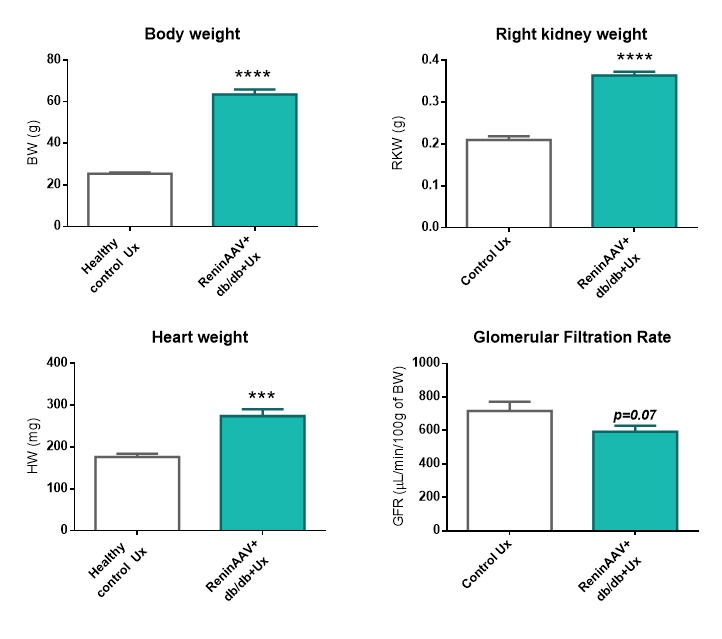
Phenotype parameters
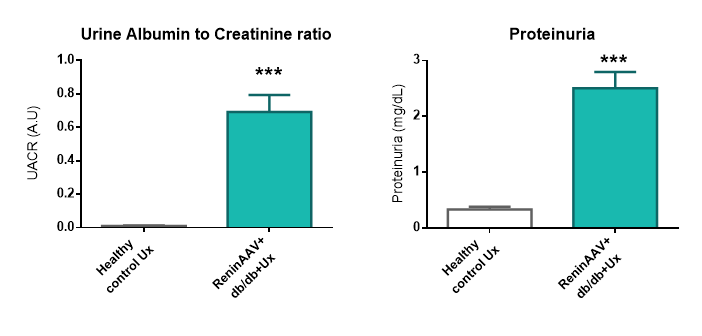
Urinary parameters
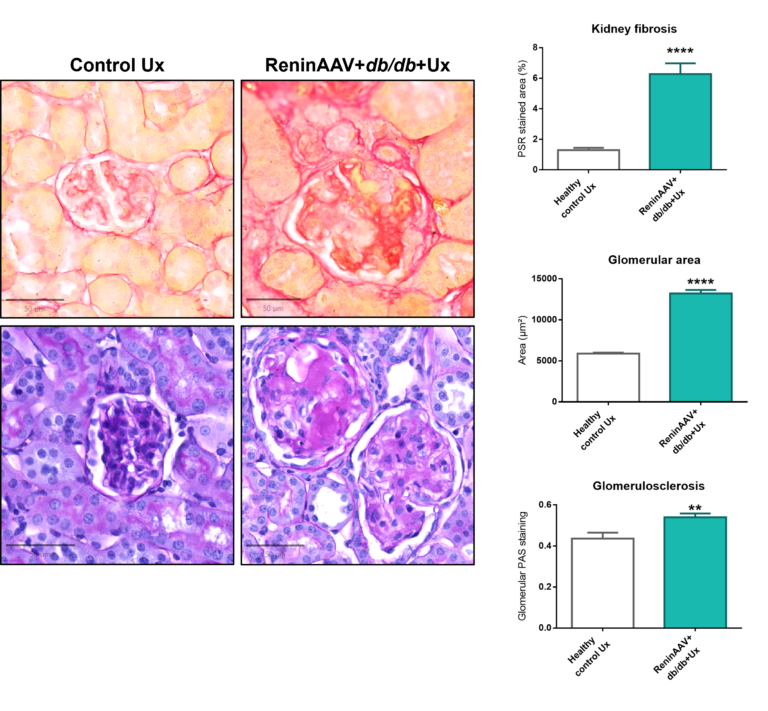
Histological analysis
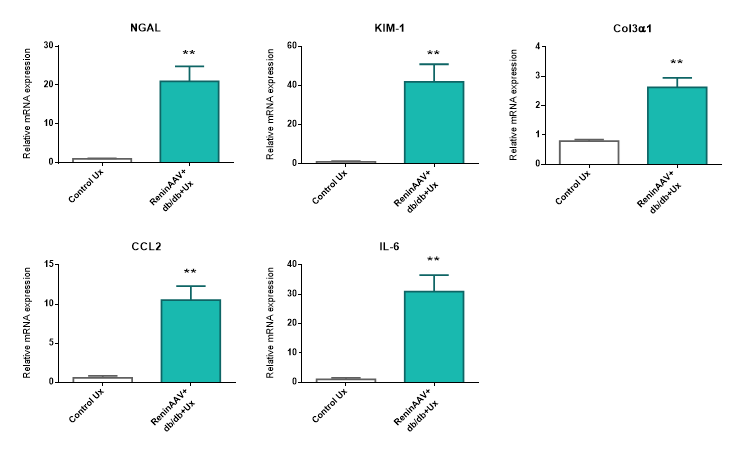
Gene expression analysis
Frequently Asked Questions – ReninAAV UNX db/db Model
Conventional db/db mice develop obesity, insulin resistance, hyperglycemia, and progressive albuminuria, but their renal pathological changes may remain relatively moderate. The ReninAAV UNx db/db model introduces two additional factors: reduced renal mass through unilateral nephrectomy and hypertension through AAV-mediated renin overexpression.
These additional disease drivers promote more pronounced glomerular injury and kidney disease progression.
Key endpoints include urinary albumin-to-creatinine ratio (UACR), quantitative glomerulosclerosis scoring, tubular injury markers, and renal fibrosis assessment.
Complementary analyses of renal function, inflammation, and gene expression can provide further insight into the mechanisms of action of candidate therapies.
Yes. Published studies support its use for evaluating therapeutic approaches targeting diabetic kidney injury, including agents affecting metabolic and hemodynamic pathways.
The model may also be relevant for assessing anti-inflammatory and antifibrotic candidates, provided that the selected endpoints and disease stage are appropriate for the therapeutic mechanism.
The experimental timeline depends on treatment initiation, and study endpoints. Efficacy studies generally involve 12 weeks treatment periods, allowing longitudinal assessment of renal disease progression.